

by Chris LaVoie
We live in an amazing place. For the price of an average tract home in Southern California, you can get a McKenzie River home with gorgeous river views and even prime riverfront property! Yet along with the privilege of living in this magical setting, we have some tradeoffs. As the climate is changing, we have additional considerations for staying safe and minimizing risk.
For us it’s wild fire risk, yet other places have their own risks. In California its fires and earthquakes, midwest its heat domes, Texas its flooding, the east coast (especially Florida, has to deal with the constant risk of hurricanes each season. The list goes on and on.
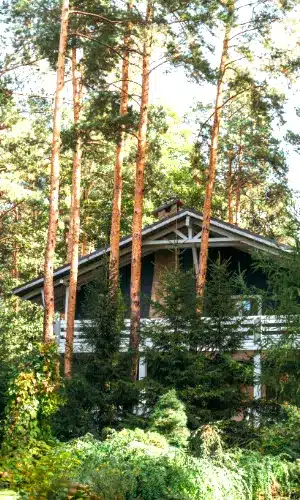
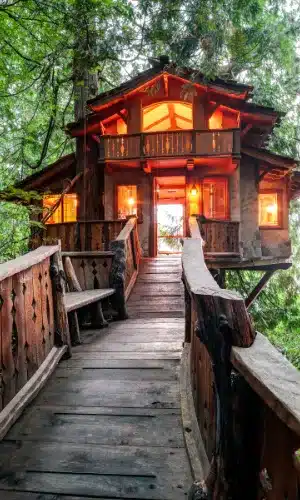
I came to Oregon following the lure of the lush green forest and the pristine rivers. My ideal home moving to the McKenzie was a house surrounded by trees! Even better: a real treehouse!! (Like the one in the 2nd image below.) Now, these are huge “No-No”s.
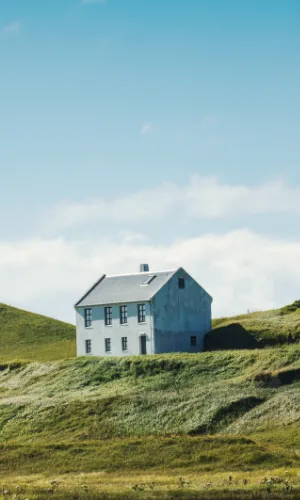
For a fun contrast, the 3rd picture depicts an extreme Firewire house – no trees or shrubs to be seen on the property. To me that seems so barren and lonely. We need to try and find a way to be safer while still enjoying our homes.
We published a couple articles to help residents find a balance:
- exploring Firewise success tips
- identifying dangerous trees to remove from around your house
- providing some naturally fire resistant trees and shrubs
You can use these as a starting place for making your home safer while embracing the beauty of our beloved McKenzie River – and avoid having your home look like the 3rd house in the photos (unless you really like that look).
Keep reading to get a better understanding of the risks we continue to face.
1. Ongoing Risk in the McKenzie Valley
The 2025 National Seasonal Fire Outlook forecasts above-normal wildfire risk across much of Oregon, including western regions like the McKenzie River corridor where Blue River lies Wikipedia. Elevated temperatures and earlier snowmelt have led to unusually dry vegetation—critical fuel for wildfire ignition and spread.
2. Lessons from the Holiday Farm Fire
The Holiday Farm Fire of 2020 was extraordinarily destructive—burning over 173,000 acres and obliterating Blue River and nearby communities Wikipedia Eugene, OR. State fire officials note that such intense, wind-driven fires are now part of the “new normal,” driven by climate change and increasingly severe fire weather Eugene, OR. This underscores that, even after a major fire, the underlying wildfire risk remains elevated.
3. Terrain Hazards Still Present
Recovery efforts continue to contend with unstable conditions, such as steep terrain, weakened trees, and erosion—factors that increase both fire risk and danger to firefighting operations. For instance, the Ore Fire—burning just northeast of Blue River in the Willamette National Forest—has required crews to navigate falling rocks and hazardous slopes while containing the blaze KLCC.
4. Statewide Policy Enhancements
In response to increasing wildfire threats, Oregon in early 2025 unveiled new building and defensible-space requirements in designated wildfire hazard zones. These enforce stricter building codes (e.g., fire-resistant materials) and vegetation management on affected properties—though insurance rates remain protected under state law KLCCAP News.
Summary: Is Blue River More At Risk Post-Fire?
- Yes. Climate trends—like warmer, drier springs and summers—continue to elevate fire risk in western Oregon, including Blue River.
- Yes. Remaining fuels, charred forests, steep terrain, and slow ecological recovery add complexity for fire prevention and suppression.
- Yes. New regulations reflect both acknowledgment of the heightened risk and a move toward smarter, more resilient rebuilding.
What This Means for Residents and Rebuilders
| Concern | What to Know |
|---|---|
| Wildfire Risk | Elevated, especially during dry, windy periods. Seasonal conditions predict above-normal risk this year. |
| Environmental Hazards | Burned slopes and weakened trees increase secondary risks like erosion and abrupt fire spread. |
| Rebuilding Strategies | Adhere to new defensible-space guidelines and building codes—like using fire-resistant materials and managing vegetation. |
So Yeah, We Have a Higher Risk
The communities along the McKenzie River remain vulnerable to future wildfires—not just from the fresh scars of 2020, but because of longer-term climate and environmental shifts. The blend of remaining fuel loads, challenging terrain, and ongoing regional fire danger means vigilance and adaptation are still essential.
So What Should We Do?
I for one LOVE it here! Even with a higher fire risk, I don’t want to leave.
While I miss the thick woods prior to the fire, I am also enjoying the wider views now that the surrounding forest has been thinned. I am also enjoying watching the natural cycle of the forest progress through the fire and now into its rebirth season.
Instead, I will prepare and lessen the fire risk.
As a community , if we all prepare our homes to meet Firewise standards are risks will go way down. Even if another fore hits the forest around us, with good Firewise preparedness, the fire risk for your home will surely go way down.