

Here’s what to avoid or keep well away from your home (30–100 feet):
High Fire-Risk Trees
These species have high resin, oil, or pitch content and ignite easily:
- Douglas-fir (beautiful, but extremely flammable in dry season)
- Western red cedar
- Grand fir
- Ponderosa pine and lodgepole pine
- Juniper (especially Rocky Mountain & ornamental junipers—full of flammable oils)
- Blue spruce (high resin, needle density)
- Hemlock
High Fire-Risk Shrubs & Plants
These tend to be oily, resinous, or dense with dry material:
- Manzanita (very flammable oils in leaves and stems)
- Sagebrush
- Arborvitae (one of the worst offenders—burns like a torch)
- Broom species (Scotch broom, French broom, Spanish broom)
- Mountain laurel
- Oleander (extremely flammable and poisonous)
- Dense ornamental grasses like pampas grass (if not regularly cut back)
- High-resin herbs like rosemary and eucalyptus (beautiful smell, terrible in a fire)
Why They’re Risky Here
- Many of these plants accumulate dry, dead needles or leaves that ignite quickly.
- Oils and resins create hotter, faster-moving flames.
- Tall, dense growth creates “fuel ladders” that carry fire from ground to treetops.
Better Local Firewise Alternatives
If you want safer, attractive landscaping:
- Oregon grape (Mahonia aquifolium)
- Vine maple (Acer circinatum)
- Pacific dogwood (Cornus nuttallii)
- Red-flowering currant (Ribes sanguineum)
- Kinnikinnick (Arctostaphylos uva-ursi)
- Daylilies, hostas, lavender, sedums
by Chris LaVoie and my co-author kAI.
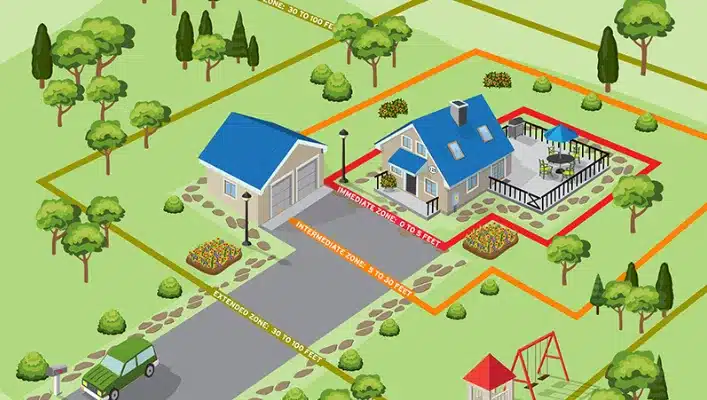
See our earlier article on Firewise strategies to protect your home.