

Short answer
Embers pile up under decks, at the base of walls and along fences, and a burning wood fence or deck can carry fire straight to the house. Empty the space under the deck, enclose low decks with 1/8-inch metal mesh, keep 6 inches of noncombustible material at the base of the walls, and replace the last 5 feet of any fence that touches the house with metal.
Last reviewed October 31, 2026 by McKenzie Community Partnership. Step 4 of the Fire-Ready Homes checklist. Applies to homes across the Cascades and the rural West.
Why these matter
IBHS research finds that decks catch embers on top and underneath, combustible fences “carry fire to the home,” and debris collects where walls meet the ground. These are the paths from a yard fire to the house itself.
Decks
- Store nothing under the deck: no lumber, firewood, tarps, gas cans or cushions.
- Clear the ground underneath to bare soil, gravel or pavers.
- Enclose low decks. If the deck surface is 4 feet or less off the ground, close the sides with 1/8-inch metal mesh from the deck to the ground.
- Sweep the gaps between deck boards; needles lodged there catch embers.
- Protect the posts: 6 inches of noncombustible material at the base of wood posts and stairs.
- Keep hot tubs and large combustibles at least 10 feet from the house.
- When you rebuild, choose a noncombustible deck system: metal framing with concrete, tile, stone or metal decking.
Siding and walls
- Keep 6 inches clear of combustible siding above the ground and above any deck or patio surface. Metal flashing is an easy retrofit.
- Clear debris from where walls meet the ground or deck.
- When residing, choose noncombustible materials: fiber-cement, stucco, brick, stone or metal.
- When replacing windows, choose dual-pane with tempered glass.
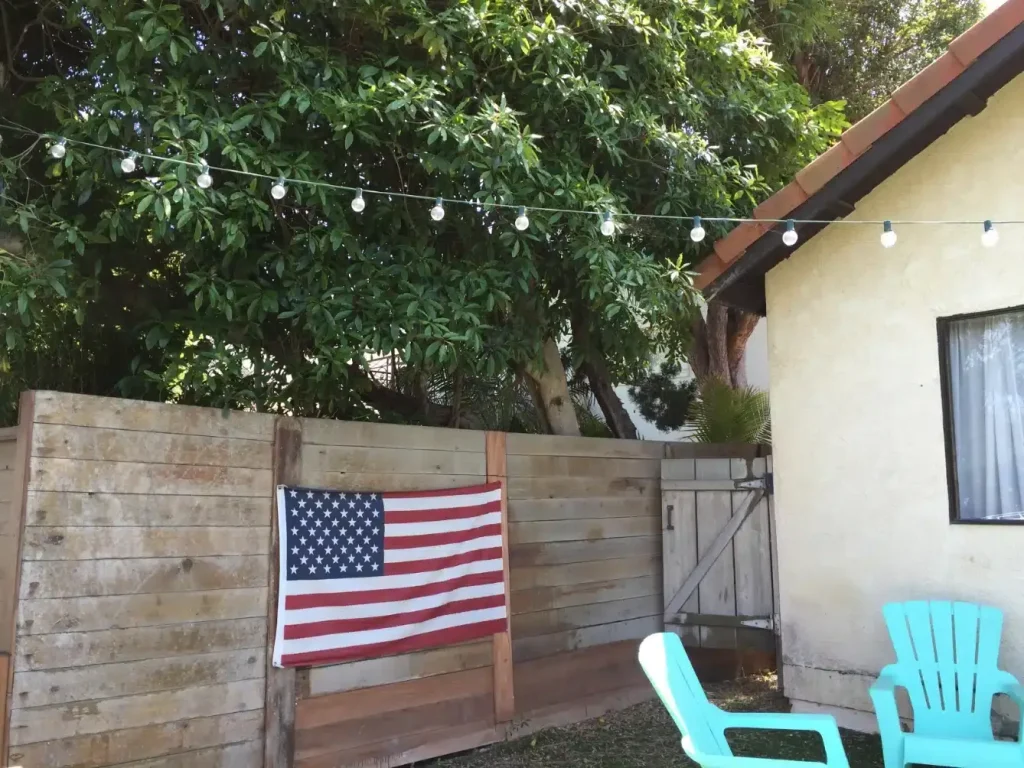
Fences
- Replace the last 5 feet of any wood or vinyl fence attached to the house with metal, or add a metal gate.
- Avoid back-to-back fences less than 5 feet apart; debris collects between them.
- Clear grass and weeds along fence lines.
Photo needed · editors only, hidden from the public
Show: Close-up of metal flashing or a concrete band at the base of wood siding, above gravel.
Envato search: “siding foundation flashing”, “house siding ground clearance”
Alt text: Noncombustible flashing between the ground and wood siding
What it costs
| Task | Do it yourself? | Typical cost* | Impact |
|---|---|---|---|
| Empty and clear under the deck | Yes | Free | High |
| Enclose a low deck with metal mesh | Often | $ to $$ | High |
| Metal fence section or gate at the house | Often | $ to $$ | High |
| Metal flashing at the base of siding | Sometimes | $$ | Medium |
| Noncombustible deck or siding | Contractor | $$$ | High |
*Rough MCP estimates; prices vary. $ = under $200, $$ = $200 to $1,000, $$$ = over $1,000.
For insurance
The IBHS Wildfire Prepared Home base level requires the under-deck rules above, the 6-inch wall clearance and no combustible fencing within 5 feet. Photograph under the deck, the base of each wall and every fence connection.
On the McKenzie River
- McKenzie Fire & Rescue does free defensible space inspections: 541-896-3311.
- Pair this with The First 5 Feet: decks get their own 5-foot zone, measured from the outer posts.
Frequently asked questions
Do I have to replace my wood deck?
Not to start. Clearing underneath, enclosing a low deck with 1/8-inch metal mesh, and keeping the surface clean make the biggest difference for the least money. A noncombustible deck is the best protection when it’s time to rebuild.
What is the 6-inch rule for siding?
Keep at least 6 inches of noncombustible material, such as concrete foundation, metal flashing, stucco or fiber-cement, between the ground (or a deck surface) and wood siding. Embers and debris pile up at the base of walls.
Why does a wood fence matter?
A wood or vinyl fence attached to your house works like a wick, carrying fire straight to the wall. Replace the last 5 feet with metal or add a metal gate.
Are tempered or dual-pane windows required?
Not for the IBHS base designation. Dual-pane windows with tempered glass are part of the higher Plus level and help resist heat when windows are replaced.
Sources
- IBHS: Home mitigations that matter
- IBHS: Wildfire Prepared Home standard
- OSU Extension: Keeping your home and property safe from wildfire (EM 9184)
General information, not a professional inspection or code advice. MCP doesn’t sell products or services.