

Short answer
Embers can blow through attic, eave and foundation vents and ignite the dust, insulation and stored items inside. Cover every vent with noncombustible metal mesh with openings of 1/8 inch or smaller, or replace vents with tested ember-resistant models. It’s one of the cheapest upgrades on the list, and insurers recognize it.
Last reviewed October 31, 2026 by McKenzie Community Partnership. Step 3 of the Fire-Ready Homes checklist. Applies to homes across the Cascades and the rural West.
Why vents matter
Vents are openings by design. During a wildfire, embers ride the same air currents into your attic or crawl space. Once inside, they land on material that won’t be cleared away: dust, insulation, cardboard and lumber. IBHS says vent openings “must be protected with a 1/8-inch or finer noncombustible mesh screen.”
The checklist
- Find every vent: foundation and crawl-space vents, soffit and eave vents, gable-end vents, and roof or ridge vents.
- Check the screen size. Many older homes have 1/4-inch screen, which lets embers through.
- Cover with 1/8-inch metal mesh, corrosion-resistant (galvanized or stainless). Fasten it on the outside, overlapping the frame.
- Consider ember-resistant vents, tested to ASTM E2886, for gable ends and anywhere flames could reach.
- Leave the dryer vent unscreened. Make sure its flap closes.
- Clean the mesh each spring and fall, since lint, needles and spider webs clog it.
- Clear inside storage away from vents: no cardboard or lumber stacked against them in the attic or crawl space.
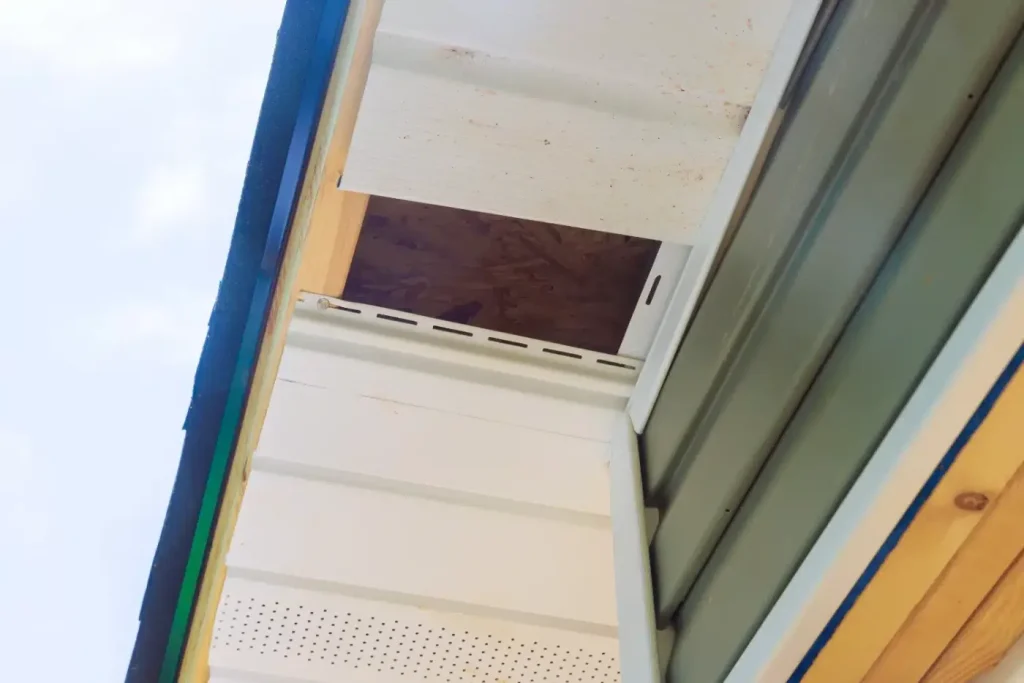
What it costs
| Task | Do it yourself? | Typical cost* | Impact |
|---|---|---|---|
| Add 1/8-inch metal mesh to existing vents | Yes | $ | High |
| Replace with ember-resistant vents | Often | $ to $$ (roughly $40 or more per vent) | High |
| Clean vent screens | Yes | Free | Medium |
*Rough MCP estimates; prices vary. $ = under $200, $$ = $200 to $1,000, $$$ = over $1,000.
Mistakes to avoid
- Plastic or fiberglass screen: it melts.
- Permanently sealing vents: attics and crawl spaces need airflow to stay dry, which matters in our wet winters.
- Screening a dryer vent: lint fire risk.
For insurance
The IBHS Wildfire Prepared Home standard requires either 1/8-inch-or-finer noncombustible mesh or tested ember-resistant vents. Photograph each vent after you screen it.
On the McKenzie River
- McKenzie Fire & Rescue does free defensible space inspections: 541-896-3311.
- Ask the inspector to look at your vents too, especially foundation vents behind shrubs or under decks.
Frequently asked questions
What size mesh keeps embers out of vents?
Use noncombustible, corrosion-resistant metal mesh with openings of 1/8 inch or smaller. Common 1/4-inch screens let embers through. Never use plastic or fiberglass screen.
What is an ember-resistant vent?
A vent that has passed ember and flame testing, such as the ASTM E2886 standard. They cost more than mesh but resist embers and flames better, especially on gable ends.
Should I screen my dryer vent?
No. Mesh on a dryer vent clogs with lint and is a fire hazard. Make sure the vent has a working flap or louver that closes when the dryer is off.
Will finer mesh reduce airflow in my attic?
Somewhat. 1/8-inch mesh keeps most of the airflow; 1/16-inch keeps less and needs more cleaning. If you add many ember-resistant vents, ask a contractor whether your attic still has enough ventilation.
Sources
- IBHS: Home mitigations that matter
- IBHS: Wildfire Prepared Home standard
- Fire Safe Marin: Fire-resistant vents
- OSU Extension: Keeping your home and property safe from wildfire (EM 9184)
General information, not a professional inspection or code advice. MCP doesn’t sell products or services.