

Short answer
Your roof catches more wind-blown embers than any other part of your house. Keep the roof and gutters clear of needles, leaves and moss, cut back branches that hang over it, and use metal gutters. When it’s time to replace the roof, choose a Class A rated covering. Wood shakes are the single biggest roof risk.
Last reviewed October 31, 2026 by McKenzie Community Partnership. Step 2 of the Fire-Ready Homes checklist. Applies to homes across the Cascades and the rural West.
Why the roof matters
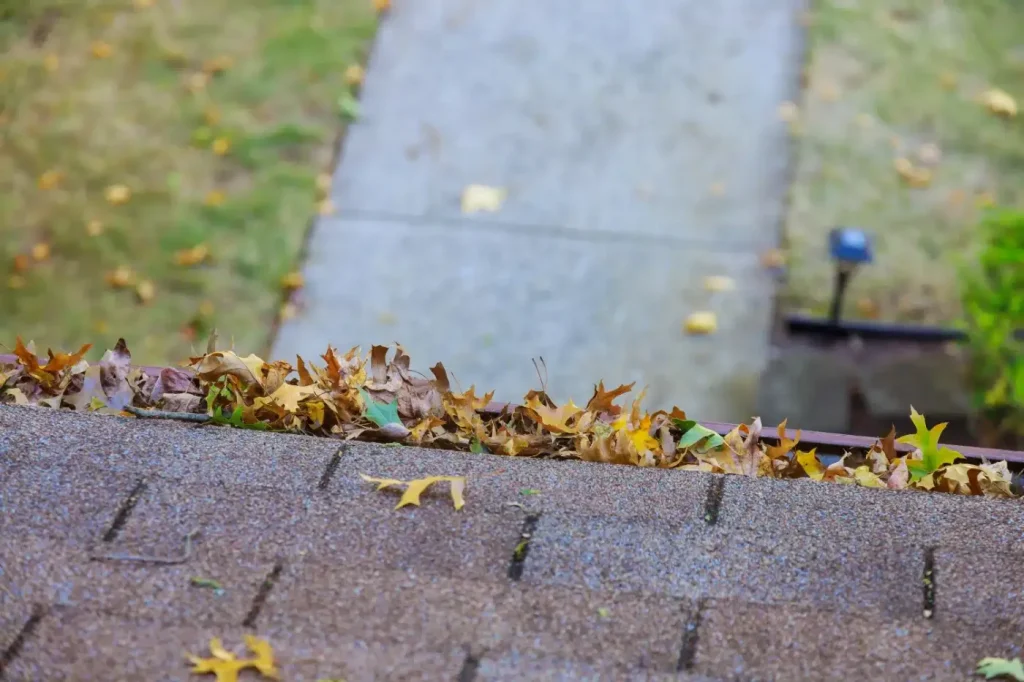
Embers fall on the roof first and lodge wherever debris collects: in valleys, behind chimneys, along roof-to-wall joints and in gutters. Dry needles there act like kindling. The Insurance Institute for Business & Home Safety (IBHS) lists a Class A roof covering and clean, covered gutters among the measures that matter most, and insurers ask about roof type on almost every policy.
The checklist
- Clear the roof and valleys of needles, leaves and moss. Pay extra attention where roof meets wall and around chimneys and skylights.
- Clean the gutters and downspouts, then check them again after storms.
- Use metal gutters. Vinyl gutters melt and fall when debris in them ignites.
- Add noncombustible gutter guards to cut down on buildup. They still need checking.
- Trim branches so nothing hangs over the roof, and keep foliage at least 10 feet from chimney outlets.
- Close gaps at roof edges. On tile and metal roofs, plug open ends at the eaves and ridge (called bird stops) so embers and nests can’t get in.
- Know your rating. Find your roof type on your insurance policy, permit records or the manufacturer’s label.
- Replace with Class A when the roof is at the end of its life. Composition shingles, tile and metal can all qualify.
- Close skylights when fire threatens, and keep branches away from them.
What it costs
| Task | Do it yourself? | Typical cost* | Impact |
|---|---|---|---|
| Clean roof and gutters | Yes, if you can work safely on a ladder | Free to $ | High |
| Trim overhanging branches | Small limbs yes; large trees hire an arborist | Free to $$ | High |
| Metal gutter guards | Often | $ to $$ | Medium |
| Replace vinyl gutters with metal | Sometimes | $$ | Medium |
| Replace roof with Class A covering | Contractor | $$$ | High |
*Rough MCP estimates; prices vary. $ = under $200, $$ = $200 to $1,000, $$$ = over $1,000.
In the Pacific Northwest
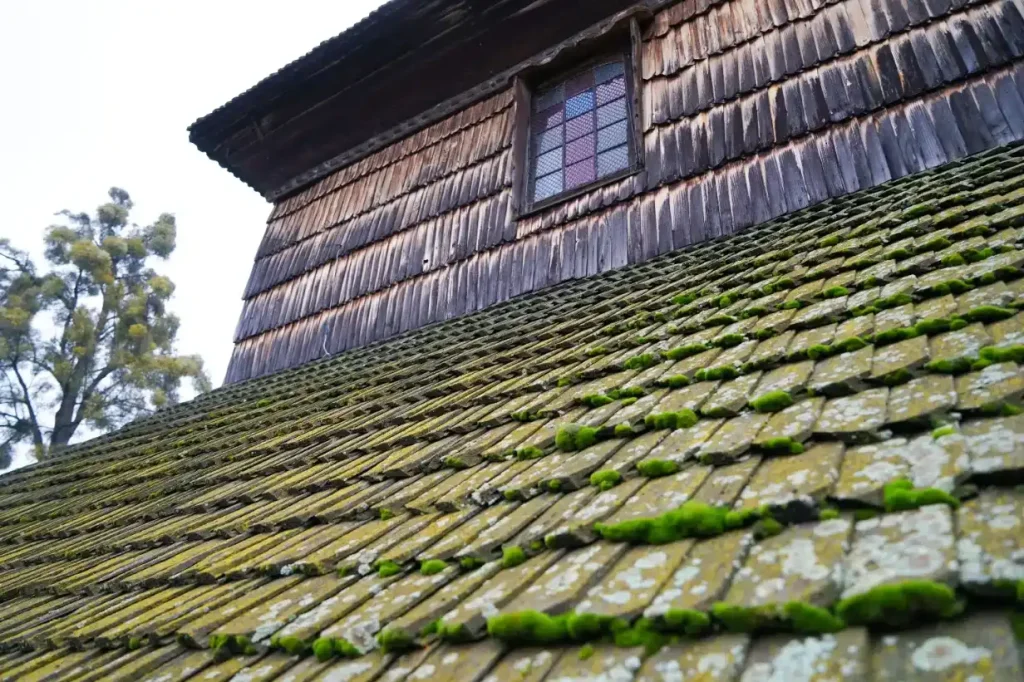
Our wet climate grows moss fast, and conifers drop needles year-round with a heavy fall drop. Moss and needle mats hold debris against the roof and dry out in late summer. Clean in late spring before fire season and again after the fall needle drop. Use a roof-safe moss treatment rather than pressure washing, which can damage shingles.
For insurance
Roof type and condition are among the first things insurers check. A Class A roof is required for an IBHS Wildfire Prepared Home designation, along with metal gutters kept free of debris. Take dated photos after each cleaning.
On the McKenzie River
- McKenzie Fire & Rescue does free defensible space inspections: 541-896-3311.
- Rebuilt after the Holiday Farm Fire? Your new roof is likely Class A. Find the paperwork and keep it with your insurance documents.
Frequently asked questions
What is a Class A roof?
The highest fire rating a roof covering can earn under standard fire tests (ASTM E108 / UL 790). Common Class A coverings include asphalt fiberglass composition shingles, concrete and clay tile, and some metal roofs installed as a rated assembly.
Is a wood shake roof safe if it’s treated?
Some pressure-treated shakes can reach a Class A assembly rating, but they lose protection as they weather. The IBHS Wildfire Prepared Home standard does not accept any wood roof covering. If you have shakes, plan to replace them.
Do gutter guards stop wildfire risk?
They reduce debris but don’t eliminate it, and none are maintenance-free. Use noncombustible (metal) guards and still check the roof and gutters each spring and fall.
How often should I clean my roof and gutters?
At least twice a year: late spring before fire season and after the fall needle drop. In conifer country, check again before any hot, windy forecast.
Sources
- IBHS: Wildfire Prepared Home standard
- IBHS: Home mitigations that matter
- Fire Safe Marin: Fire-resistant roofs
- OSU Extension: Keeping your home and property safe from wildfire (EM 9184)
General information, not a professional inspection or code advice. MCP doesn’t sell products or services.