

By Chris LaVoie
“We already have clean energy infrastructure in place. Why destroy what’s working?”
Introduction
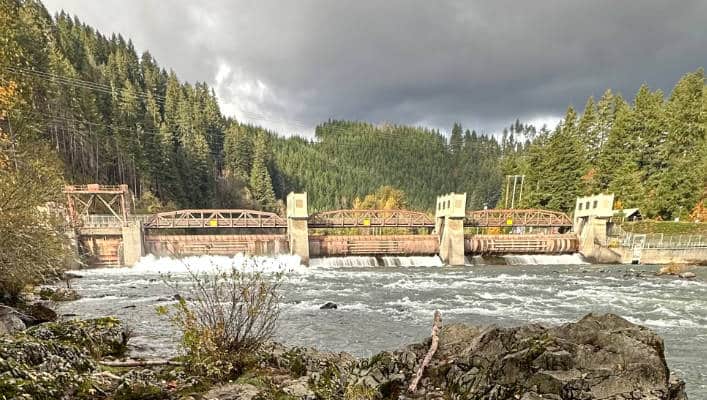
When Eugene Water & Electric Board (EWEB) voted in 2022 to decommission the historic Leaburg Dam and power plant on the McKenzie River, many residents of the McKenzie River Valley were left wondering what this would mean for their community.
Leaburg Lake isn’t just a reservoir — it’s one of our local attractions for recreation, tourism, local agriculture, and Oregon’s renewable energy landscape. To understand what’s at stake and why local advocates are raising the alarm, I sat down with Nadine Scott, spokesperson for Oregon Citizens for Energy Security (OCES), to talk about the future of hydropower, tourism, and energy security in the region.
Editor’s Note:
This article is presented in a Question & Answer format to introduce a local group working to preserve the Leaburg Dam. The potential removal of the dam raises many issues that extend beyond power generation — including tourism, recreation, and the enjoyment of property along the existing lake.
This interview is intended to share information and insight from Oregon Citizens for Energy Security (OCES), not to challenge their position. We plan to publish perspectives from all sides of this discussion.
If you have a strong opinion or viewpoint that could help inform the community, we welcome your input — please reach out and share your perspective.
The Role of Oregon Citizens for Energy Security
Chris: Nadine, let’s start with OCES. What does your organization stand for?
Nadine: Oregon Citizens for Energy Security is a community-based organization focused on protecting and preserving Oregon’s renewable energy resources — especially hydropower. We believe that green energy and hydropower are vital to our state’s future. Unfortunately, some decisions being made today risk dismantling systems that have served Oregon communities well for generations.
What’s Happening at Leaburg
Chris: Can you explain what’s happening with the Leaburg Power Plant?
Nadine: Certainly. EWEB has proposed demolishing the Leaburg facility and draining Leaburg Lake, at a projected cost of roughly $200 million. That figure includes removing the power plant and adapting nearby infrastructure — but it doesn’t begin to reflect the long-term impact on our economy, ecology, or the people who live here.
“It might make sense for Eugene, but not for the people who live and work in the McKenzie River area.”
Why Decommission at All?
Chris: What’s motivating EWEB to shut down the dam?
Nadine: EWEB is legally bound by its charter to prioritize the interests of the City of Eugene. Their Triple Bottom Lineanalysis looked at environmental, social, and financial factors — but it didn’t fully capture the broader community effects, such as the loss of tourism, the impact on local farmers, and changes to transportation routes like Leaburg Dam Road.
A Smarter Solution: Repair and Modernize
Chris: What alternatives do you think should be on the table?
Nadine: Repairing and upgrading the Leaburg facility. The power plant can generate enough electricity for 13,000 homes. Losing that capacity makes the region more vulnerable to outages, especially if wildfires disrupt BPA transmission lines.
Keeping the facility operational would strengthen Oregon’s local grid and increase resilience during emergencies.
Chris: But is that realistic financially?
Nadine: Not for a single utility acting alone. BPA power is inexpensive, so utilities don’t have strong incentives to reinvest locally. We’re advocating for a state-level mechanism or advisory group to evaluate these types of projects for their public benefit, not just their profit margin.
“We need a state process that looks beyond a single utility’s interests to Oregon’s long-term energy security.”
The Economic Heartbeat: Tourism
Chris: How important is Leaburg Lake to local tourism?
Nadine: It’s absolutely central. More than 100,000 vehicles cross Leaburg Dam Road each year. Visitors come to Leaburg Fish Hatchery, EWEB Water Board Park, and the lake itself for recreation. The McKenzie Discovery Center is currently being renovated with tourism in mind — focusing on Leaburg Lake and the McKenzie River experience.
If the lake is drained, all that activity vanishes. The loss of tourism revenue would be devastating for small businesses, guides, and the hospitality industry throughout the valley.
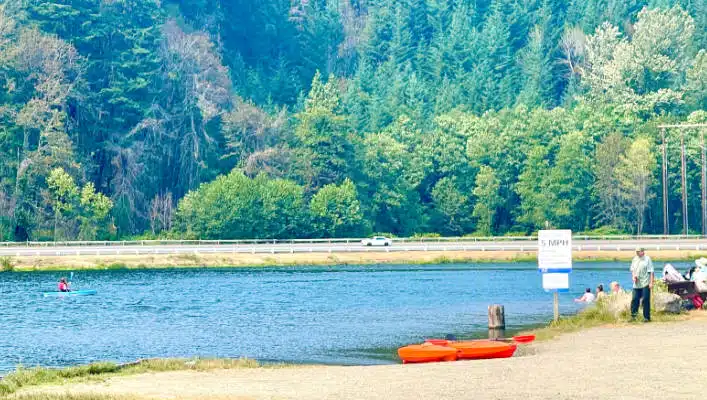
“Tourism is our main economy. Losing Leaburg Lake would be like pulling the rug out from under the McKenzie River valley.”
Salmon, Ecology, and the Hatchery
Chris: What about the environmental and fishery impacts?
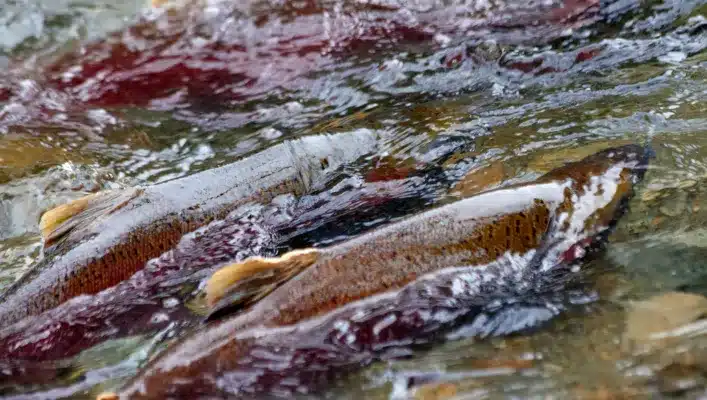
Nadine: The Leaburg Fish Hatchery relies on lake water to function. It has two fish ladders essential for maintaining salmon runs. As ocean temperatures rise and natural salmon stocks decline, hatcheries are more critical than ever. Without the lake, the hatchery — and the future of local salmon populations — would be in jeopardy.
The Ripple Effect on Farmers and Residents
Chris: How are local farmers affected by all this?
Nadine: Many farmers and homeowners depend on irrigation water from the Leaburg Canal. Since the power plant went offline, we’ve already seen irrigation challenges that impact crops, gardens, and property values. It’s another example of how interconnected all of this really is.
What Happens Next?
Chris: Is this decision final, or is there still time to act?
Nadine: It’s not a done deal. EWEB voted to decommission the dam in 2022, but they still need approvals from FERC (Federal Energy Regulatory Commission) and NEPA (National Environmental Protection Agency).
Importantly, no Environmental Impact Assessment has been completed yet — and that’s a required step. Until FERC and NEPA sign off, there’s still an opportunity for the public to weigh in.
“It’s not too late. FERC and NEPA still have to approve this — and community voices carry weight.”
How People Can Get Involved
Chris: For community members who want to help, what’s the best next step?
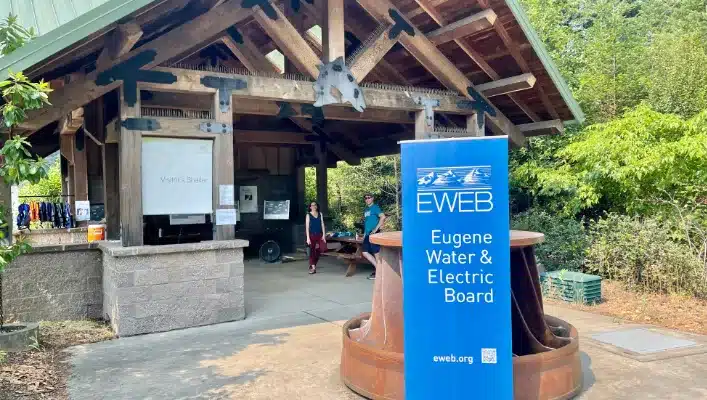
Nadine: Get informed and speak up. Visit leaburglake.com to learn more or email us at [email protected]. Most importantly, contact EWEB directly at [email protected].
Every message matters — when people speak up, decision-makers listen.
Closing Thoughts
Chris: Nadine, thank you for your time and for shedding light on this important issue.
Nadine: Thank you, Chris. This is about more than one dam — it’s about how Oregon balances progress with preservation. If we work together, we can protect the McKenzie River’s natural beauty, sustain our local economies, and strengthen Oregon’s renewable energy future.
About the Participants
Chris LaVoie is a writer, community advocate, and founder of initiatives promoting sustainable tourism and economic development in Oregon’s McKenzie River region. He also owns/operates business ventures in the area promoting for both long term residents and vacation rentals.
Nadine Scott is a representative of Oregon Citizens for Energy Security (OCES), a volunteer group advocating for responsible renewable energy management and the protection of community-based power resources. She is a leading local realtor and lives on Leaburg Lake.
#leaburg hydro #leaburg lake #leaburg dam